80%
Users requested a report card through Pendo
28%
Upgraded to a plan after trial
0%
Engineering effort required
BACKGROUND
Teachable is a SaaS platform where creators build and sell online courses where trial-to-paid conversion was a key growth metric.
DURATION
4 Weeks
MY ROLE
AI native product designer
TEAM
Matthew Malia - Senior Product Manager
Sarah Driscol - Product Design Manager
Thais Toma - Research partner
HOW IT STARTED
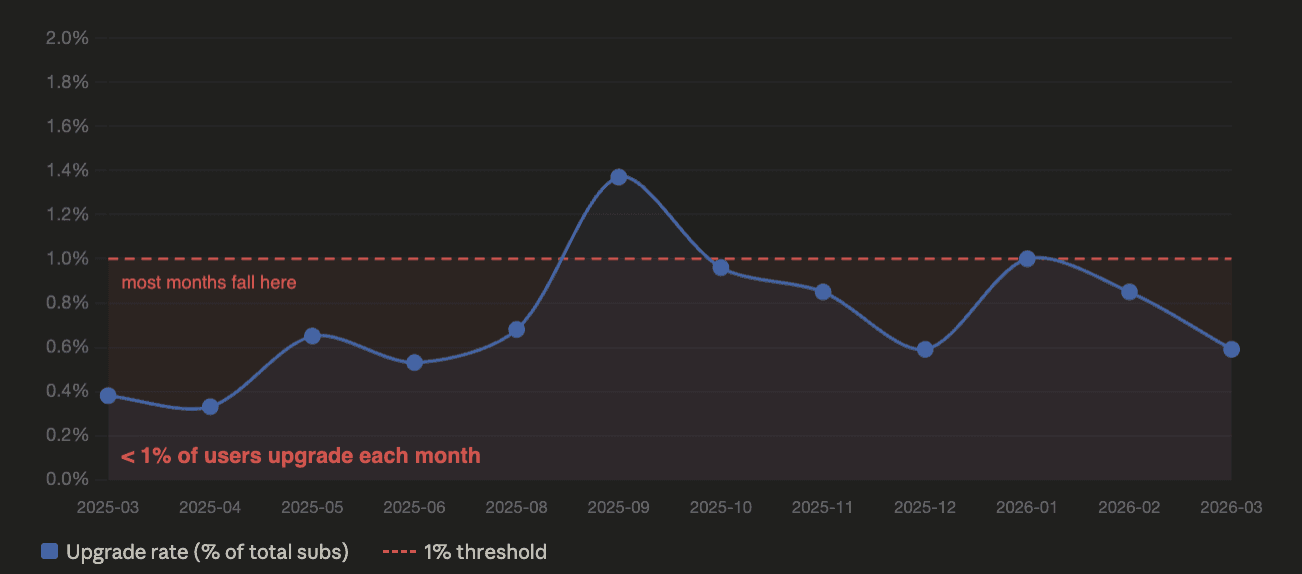
Despite a stable and growing subscriber base, upgrade rates remained consistently under 1% of total subscribers per month.
The team had assumptions about why. None of them were validated. I ran the research to find out.
PRIMARY PAIN POINT
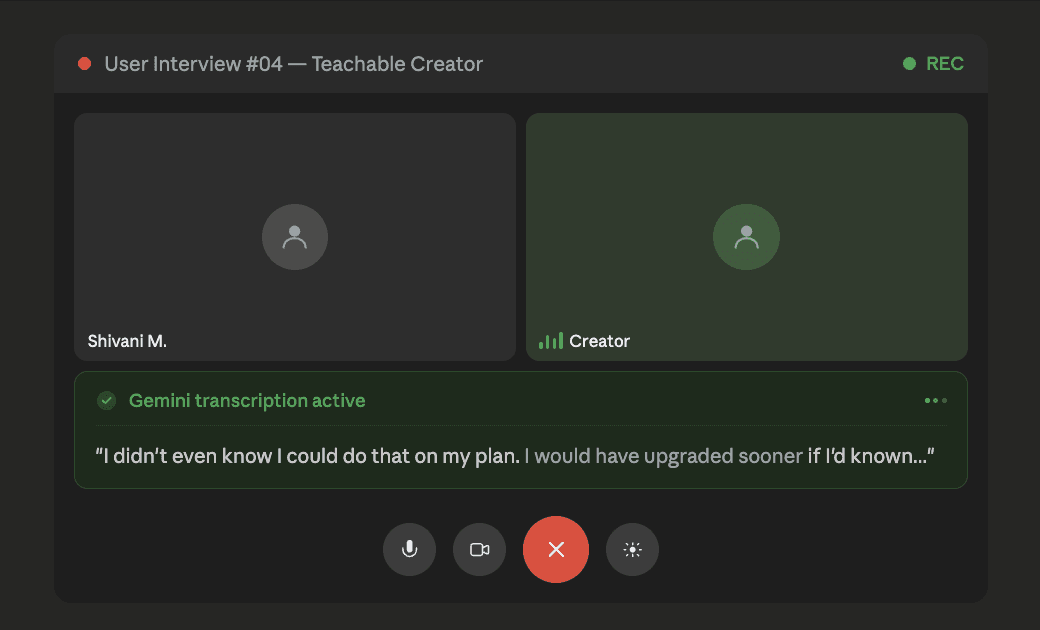
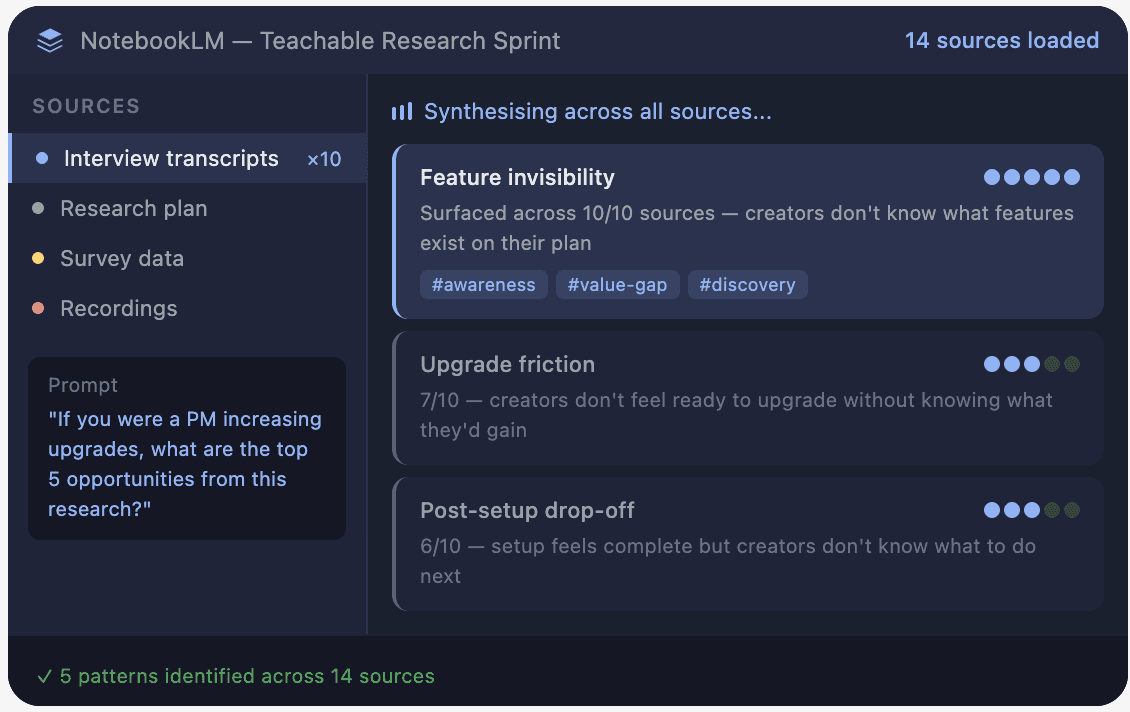
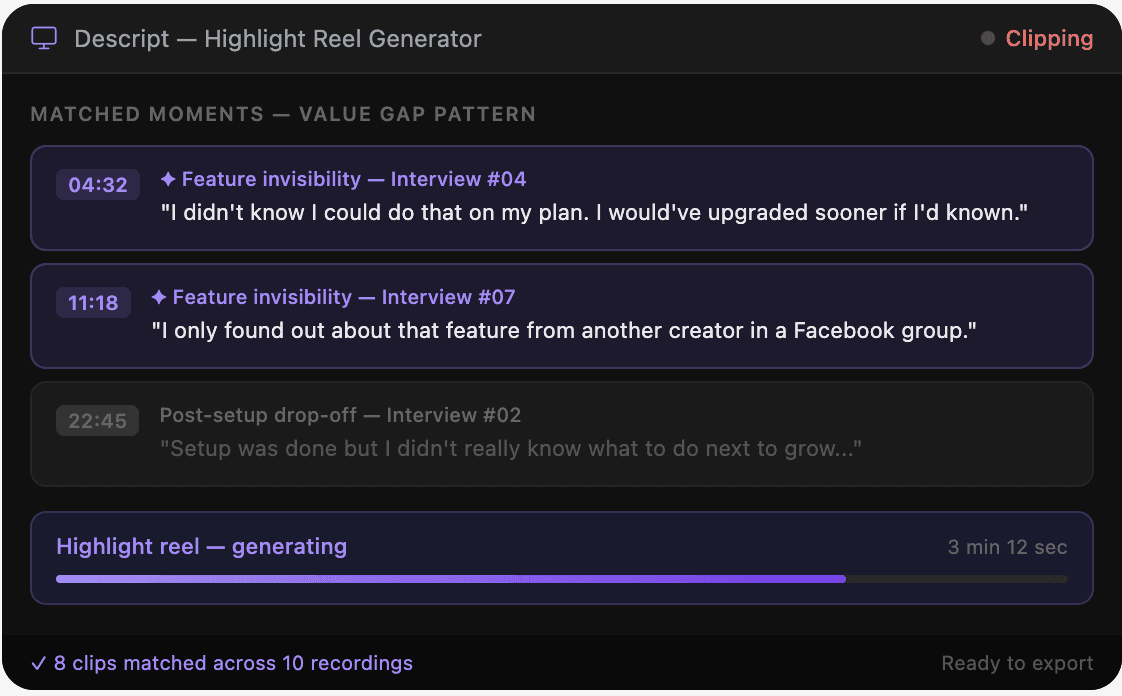
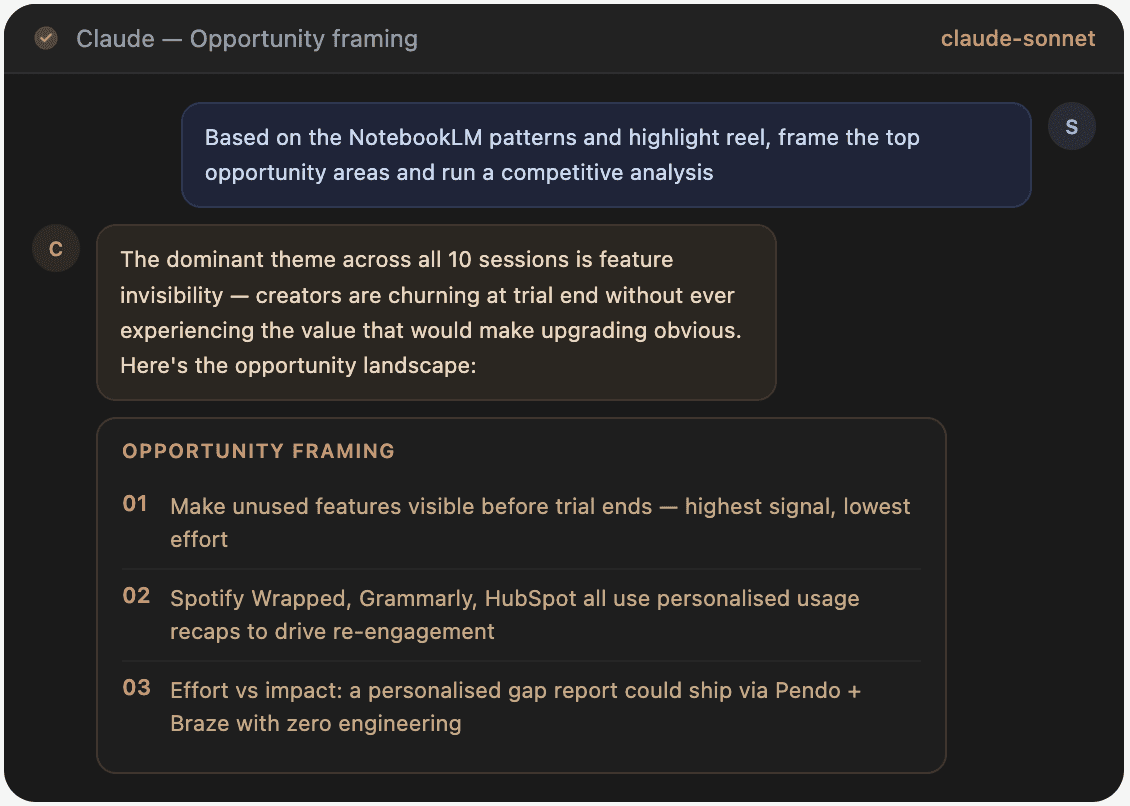
Across these interviews, we identified a consistent feature discovery and value communication gap across the Teachable experience
The upgrade blocker wasn't price. It was invisible value.
PRIMARY GOAL
How might we communicate feature value and drive upgrades without engineering resources or building new product surfaces?
BRAINSTORMING AND DECISION MAKING WITH PM
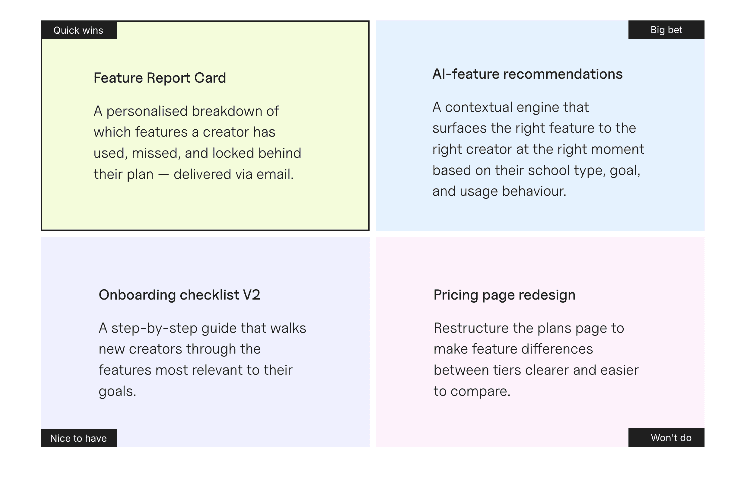
I worked with the PM to map opportunities against effort vs. impact based on engineering capacity
SOLUTION
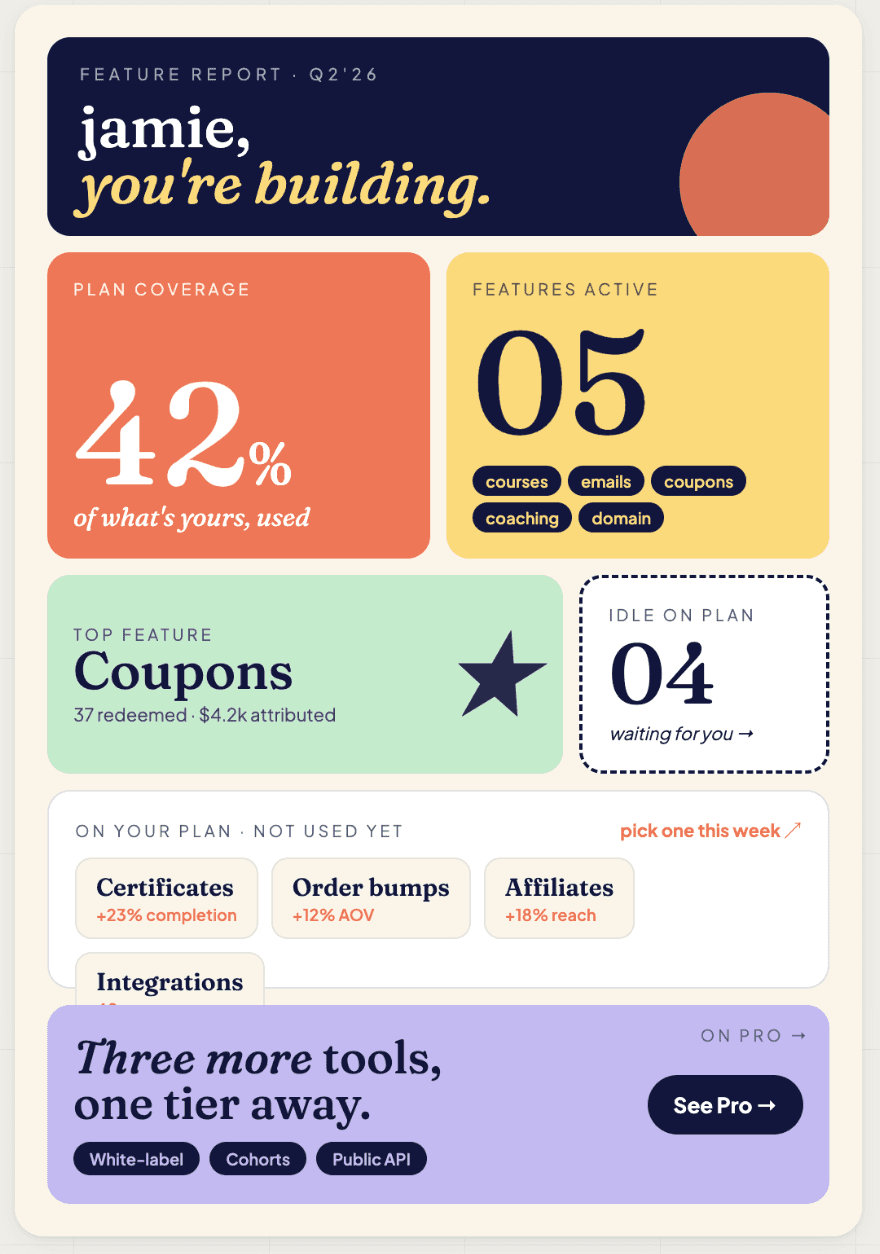
I used Claude to generate divergent layout directions for a personalised feature usage report card that makes the value gap impossible to ignore.
From a list of ideas this proved to be high impact low effort idea
DIRECTION 1
Spotify Wrapped style
Name-forward layout makes it feel personal, not generic
Social proof and ROI framing adds credibility
More celebratory and engaging for creators
Less scalable in product — better suited for marketing emails
Action items are hidden and hard to differentiate
Doesn't explain why they should upgrade
DIRECTION 2
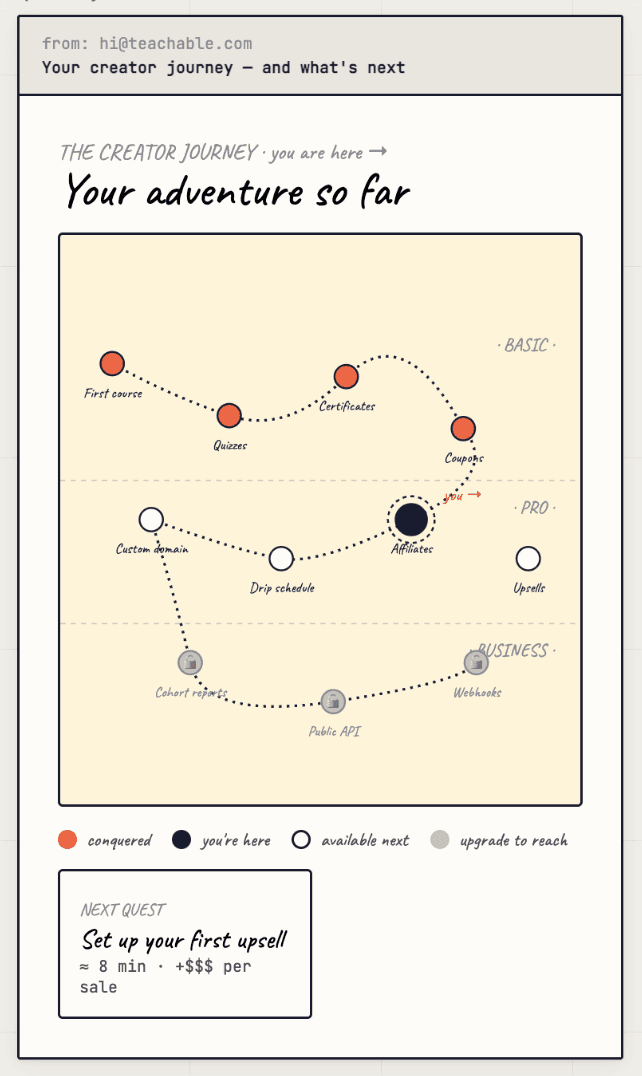
Creator journey map
Shows visual progression
Unique concept for driving upgrades
Requires learning how to read the map
Too abstract for a billing context
Nudge is not visible enough to drive action
Not scalable across product and emails
DIRECTION 3
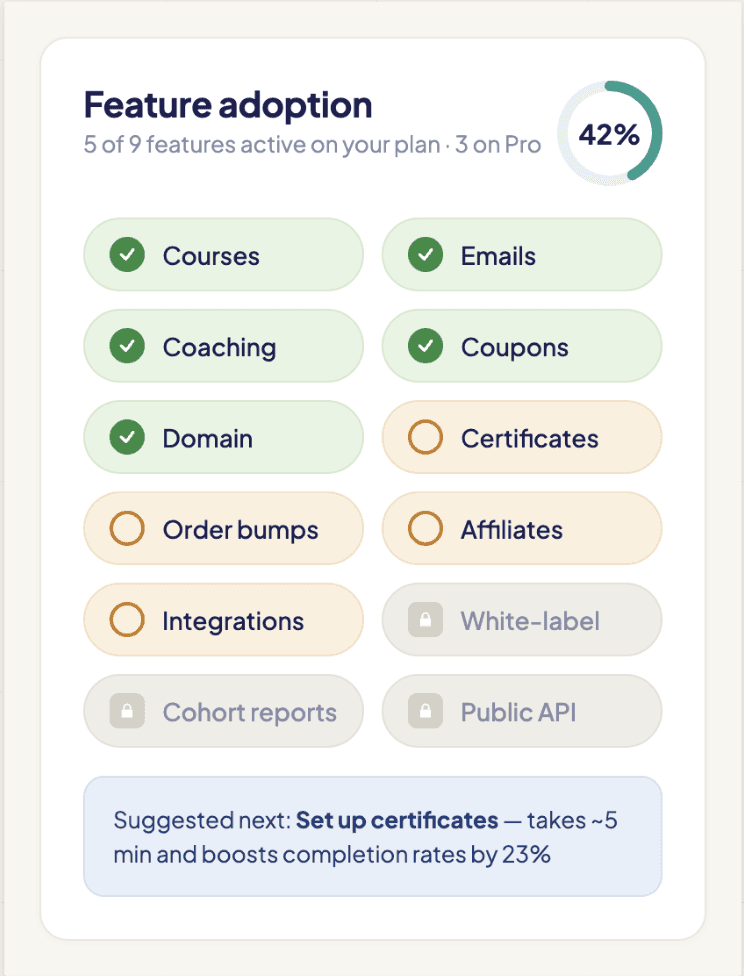
Feature grid with suggestion
Works across product and email surfaces
Shows usage data and social proof in context
No clear categorisation — colors and shapes don't communicate meaning
Less motivating tone, feels less personal
No feature description — creators don't know why each feature matters
WHAT WE DELIVERED VIA EMAIL
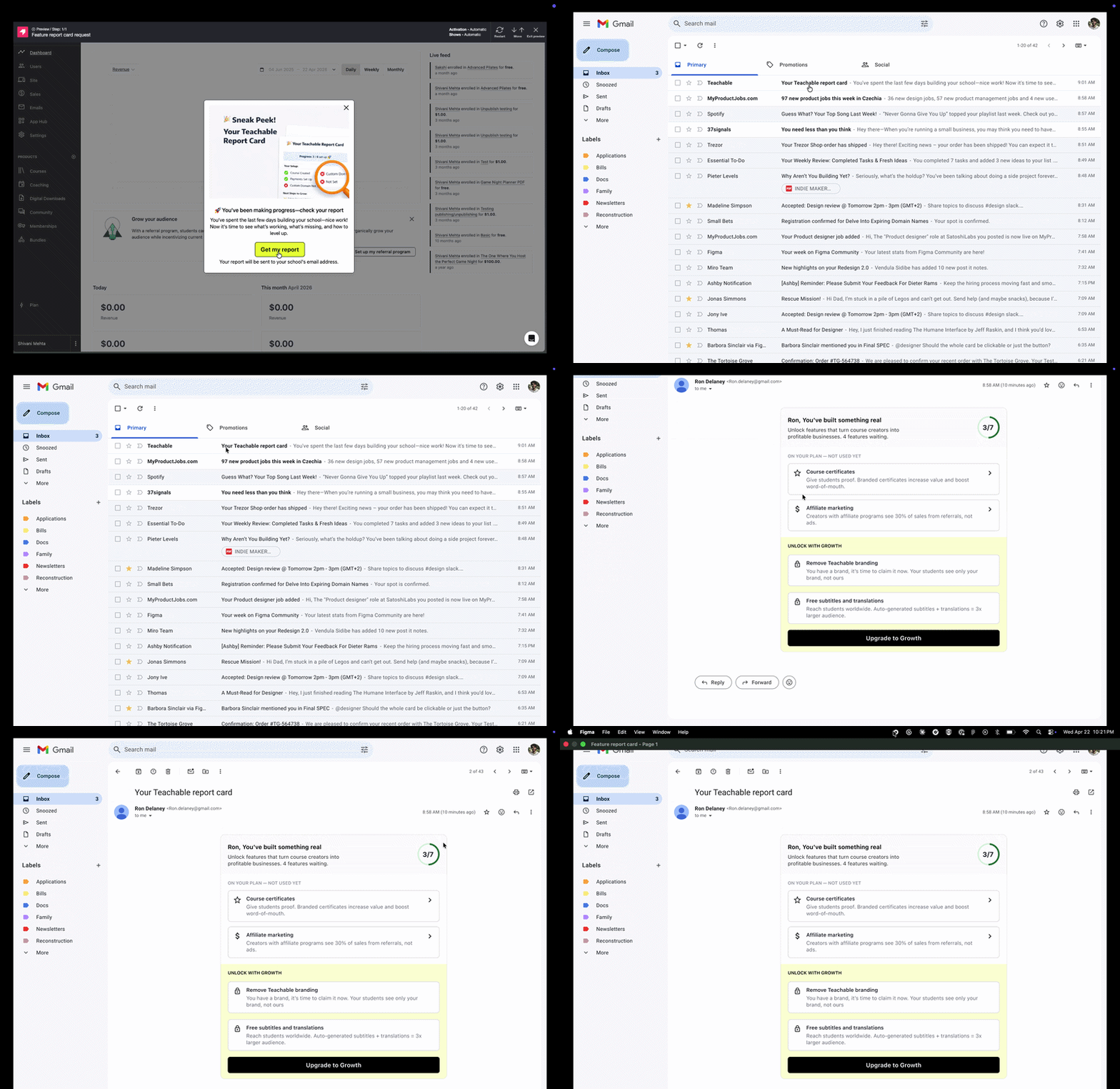
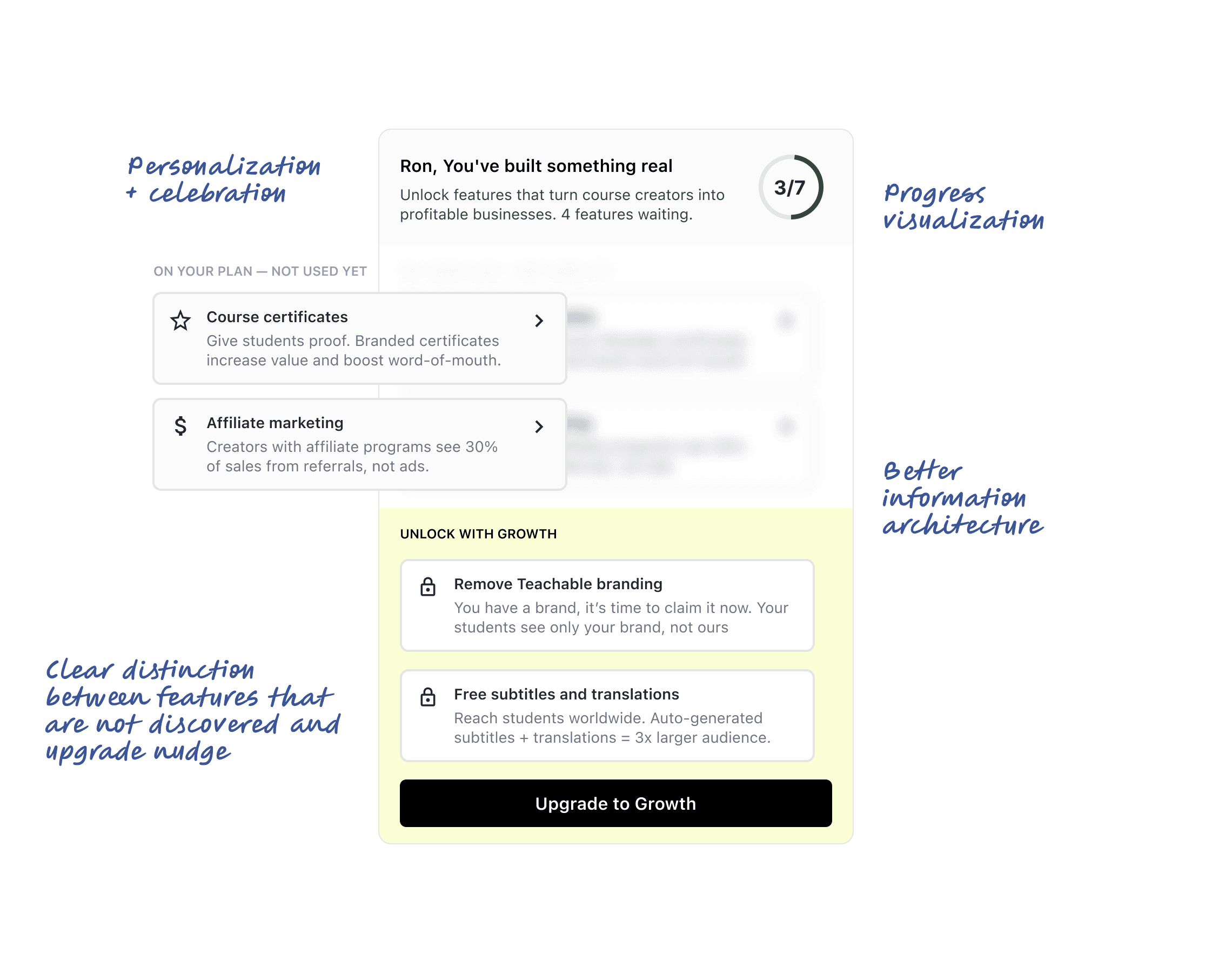
My figma design cherry-picked personalization + celebration from Direction 1, progress visualization from Direction 2, scalable card structure from Direction 3 with added human thinking
THE CLIMAX
Due to limited engineering resources, instead of building the full in-product system, I utilized Pendo, Braze and Sigma to solve this at low cost.
Sigma dashboard
Pulling feature usage data and identifying who to target
Used Sigma to query creator feature usage data — identifying which trial creators had low feature activation and which features were sitting unused. This became the targeting logic for the experiment.
Braze email
Delivering the personalised widget report
Collaborated with marketing team to build the designed widget as an email template in Braze with dynamic variables for each creator's feature data with a direct action link on every gap and a clear upgrade CTA.
IMPACT
Strong user response gave me the data to advocate successfully for the feature and was added to Q2 roadmap for engineering investment
80%
Users requested a report card through Pendo
28%
Upgraded to a plan after trial
0%
Engineering effort required
CHALLENGES
Some challenges and learnings that helped shape my understanding of using AI and working within constraints
AI hallucinations
The AI occasionally generated insights or quotes that weren't directly supported by the interview transcripts, or combined details from multiple interviews in misleading ways.
Limited engineering capacity
Limited engineering pushed me to explore and use no-code tools (Pendo + Braze) to validate the feature report card concept